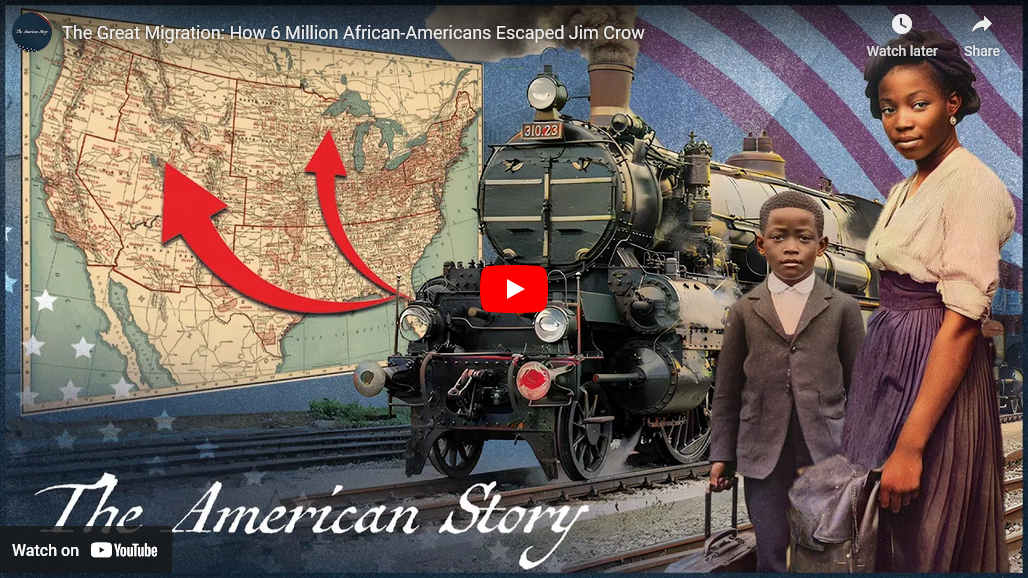
The Great Migration (1910–1970) was a transformative period in U.S. history during which millions of African Americans moved from the rural South to urban centers in the North, Midwest, and West. Below is a comprehensive list of what happened during this significant migration:
1. Causes of the Great Migration
- Jim Crow Laws: Enforced racial segregation and systemic discrimination in the South.
- Racial Violence: Lynching and threats of violence from groups like the Ku Klux Klan.
- Economic Inequality: Limited opportunities for African Americans in sharecropping and low-wage labor.
- Boll Weevil Infestation: Devastated Southern cotton crops, pushing families to seek better opportunities.
- Industrial Opportunities: Northern cities, during and after World War I and II, offered jobs in industries like steel, automotive, and manufacturing.
- World Wars: Labor shortages due to war efforts increased demand for workers in Northern cities.
2. Migration Patterns
- Regional Movements:
- From the Southeast to cities like New York, Philadelphia, and Boston.
- From the Deep South to cities like Chicago, Detroit, and Cleveland.
- From the Southwest to California cities like Los Angeles and Oakland.
- Urbanization: African Americans transitioned from rural agricultural lifestyles to urban industrial living.
3. Social and Cultural Impact
- Growth of Urban Communities: Formation of large Black neighborhoods, like Harlem in New York and Bronzeville in Chicago.
- Cultural Renaissance: The Harlem Renaissance (1920s) flourished, showcasing African American art, literature, and music.
- Jazz and Blues: Spread of Southern music genres like jazz and blues to Northern cities.
- Churches and Community Institutions: Expansion of Black churches and organizations as centers of community life.
4. Challenges Faced by Migrants
- Racism in the North: Faced discrimination in housing, employment, and education.
- Redlining and Housing Segregation: Denied access to certain neighborhoods, forcing many into overcrowded and poorly maintained areas.
- Labor Exploitation: Migrants were often given the most dangerous and lowest-paying industrial jobs.
- Social Adjustments: Struggled to adapt to urban life, new climates, and cultural shifts.
5. Political and Economic Changes
- Shift in Political Power: Migration concentrated African American populations in key cities, influencing local and national elections.
- Labor Movements: African Americans joined unions and advocated for better wages and conditions.
- Civil Rights Momentum: Created a foundation for the Civil Rights Movement as African Americans in urban areas organized for equality.
- Economic Upliftment: Some African Americans achieved greater economic stability and access to education.
6. Second Great Migration (1940–1970)
- World War II Boom: War industries and military roles created opportunities for a second wave of migration.
- Movement to the West: Increased migration to states like California and cities such as Los Angeles and Oakland.
- Suburban Expansion: Post-war economic growth allowed some African Americans to move to suburban areas.
7. Outcomes of the Great Migration
- Urban Development: African American neighborhoods became cultural and economic hubs.
- Civil Rights Advocacy: Migrants contributed to protests and legal battles for civil rights.
- Cultural Influence: Widespread influence on American music, cuisine, fashion, and literature.
- Economic Disparities: Highlighted systemic inequalities that persisted in housing, employment, and education.
- Family Fragmentation: Some families were separated during the migration, creating social and emotional challenges.
The Great Migration reshaped America’s demographic, cultural, and political landscape, laying the groundwork for modern movements for racial equality and social justice.